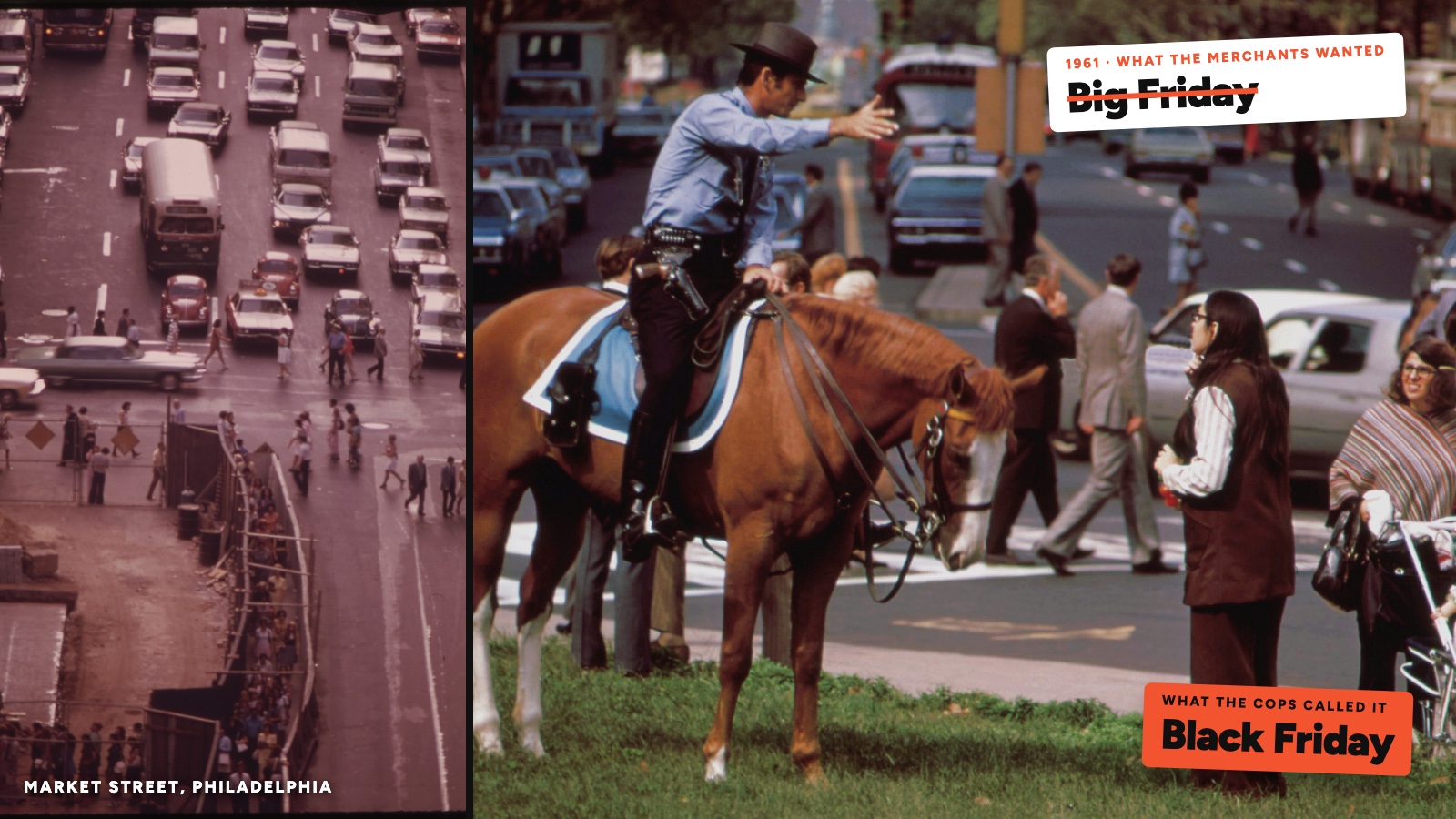
It's Black Friday weekend. If you sell anything online, you've probably run an ad with those two words on it this week, and you've probably heard why the day is called that: it's the day stores finally go from losing money ("in the red") to making it ("in the black").
That explanation is about 45 years old, and retailers came up with it. The real name came from Philadelphia's traffic police, who used it for the worst day of their year.
The merchants of Philadelphia spent years trying to get rid of that name. In 1961 they brought in a professional to rename the day. By his own report the campaign packed the stores, and the name he pushed still didn't stick. Two decades later retailers tried something different, and it worked so well that most people now repeat their version without knowing it's a sales story.
That gap, between a rebrand that failed and a story that won, is the most useful thing to understand about advertising on Black Friday in 2026.
Where did the name Black Friday come from?
In the late 1950s and early 1960s, the Friday and Saturday after Thanksgiving were the biggest shopping days of the year in American downtowns. In Philadelphia that meant crowds packed onto Market Street, the city's main downtown street, and cars backed up behind them.
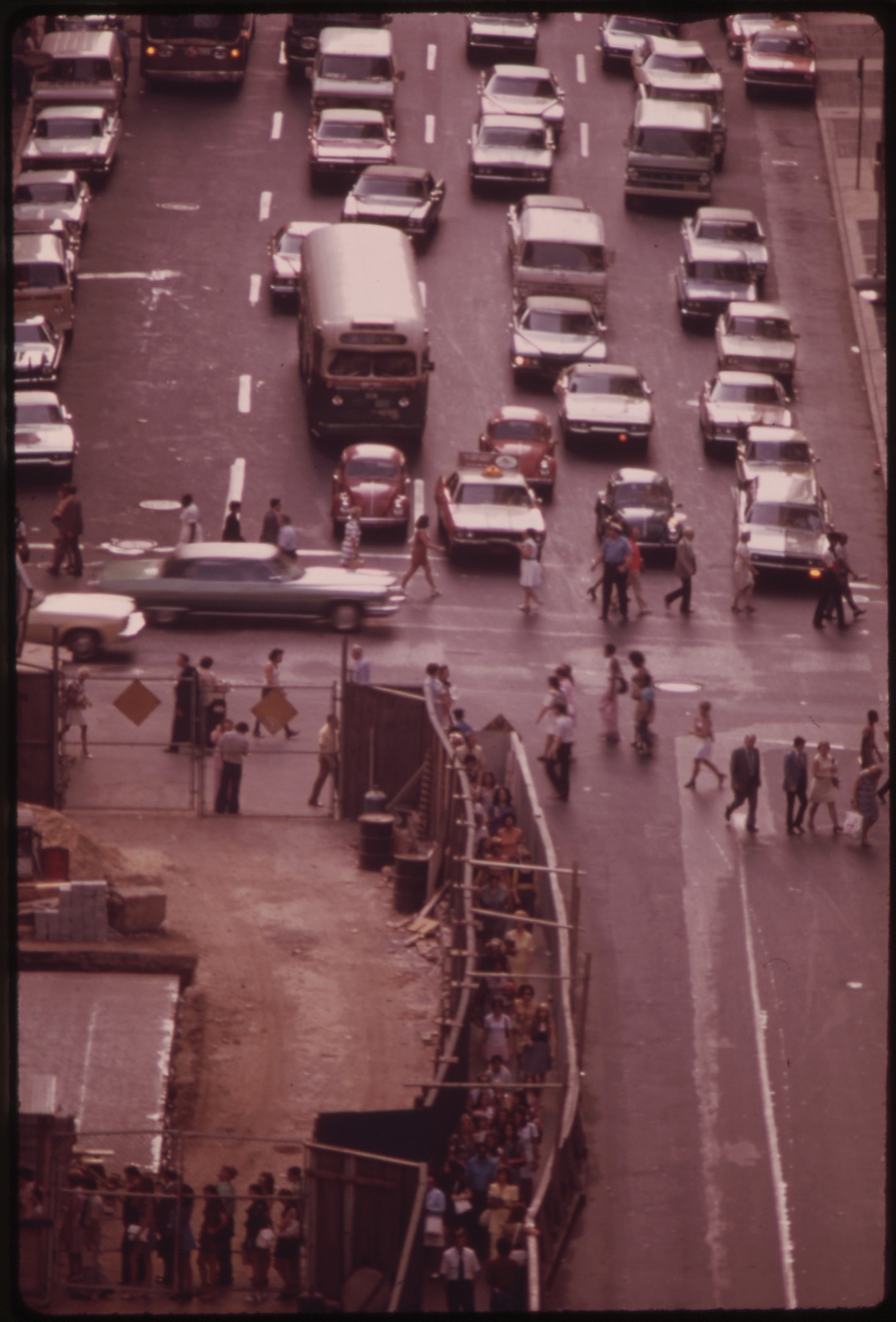
The city's traffic cops worked 12-hour shifts that day. They called it Black Friday, and the Saturday after it Black Saturday, because of the crowds and the congestion. Police in Rochester, New York used the same term.
The phrase wasn't brand new. In November 1951, a trade magazine called Factory Management and Maintenance had used "Black Friday" for the day after Thanksgiving, when so many workers called in sick for a four-day weekend. That meaning faded. The Philadelphia one spread.
It reached print through two reporters at the Philadelphia Evening Bulletin, the city's afternoon paper. Joseph P. Barrett, assigned to cover police administration in 1959, wrote that in the early 1960s he and Nathan Kleger, the Bulletin's Center City police reporter, put the police term into a front-page Thanksgiving story.
The merchants were furious. By November 1960, Women's Wear Daily, the fashion industry's trade paper, reported that Philadelphia store owners were bitter about news bulletins and police forecasts of record traffic jams for "black Friday." From their side, the newspapers were warning shoppers to stay home on the most important weekend of the year.
Why did Philadelphia try to rename it Big Friday?
Merchants had their own name for the day already. Big Friday had been in use in Pennsylvania since at least 1957, and in 1958 The Philadelphia Inquirer called the day after Thanksgiving the "Biggest Big Friday." The cops' name was winning anyway.
So in 1961 the merchants took the problem to Abe S. Rosen, Philadelphia's Deputy City Representative. The trade newsletter Public Relations News called him one of the most experienced municipal public relations executives in the country. A name like Black Friday was "hardly a stimulus for good business," the newsletter wrote. Rosen recommended a positive approach: convert Black Friday and Black Saturday into Big Friday and Big Saturday.
He didn't stop at the name. The local press ran stories about downtown Philadelphia decorated for Christmas, about a "family-day outing" to the department stores over the Thanksgiving weekend, about extra parking, and about extra police to keep traffic moving. According to Public Relations News on December 18, 1961, Rosen reported that business that weekend was so good the merchants were giving downtown "a starry-eyed new look."
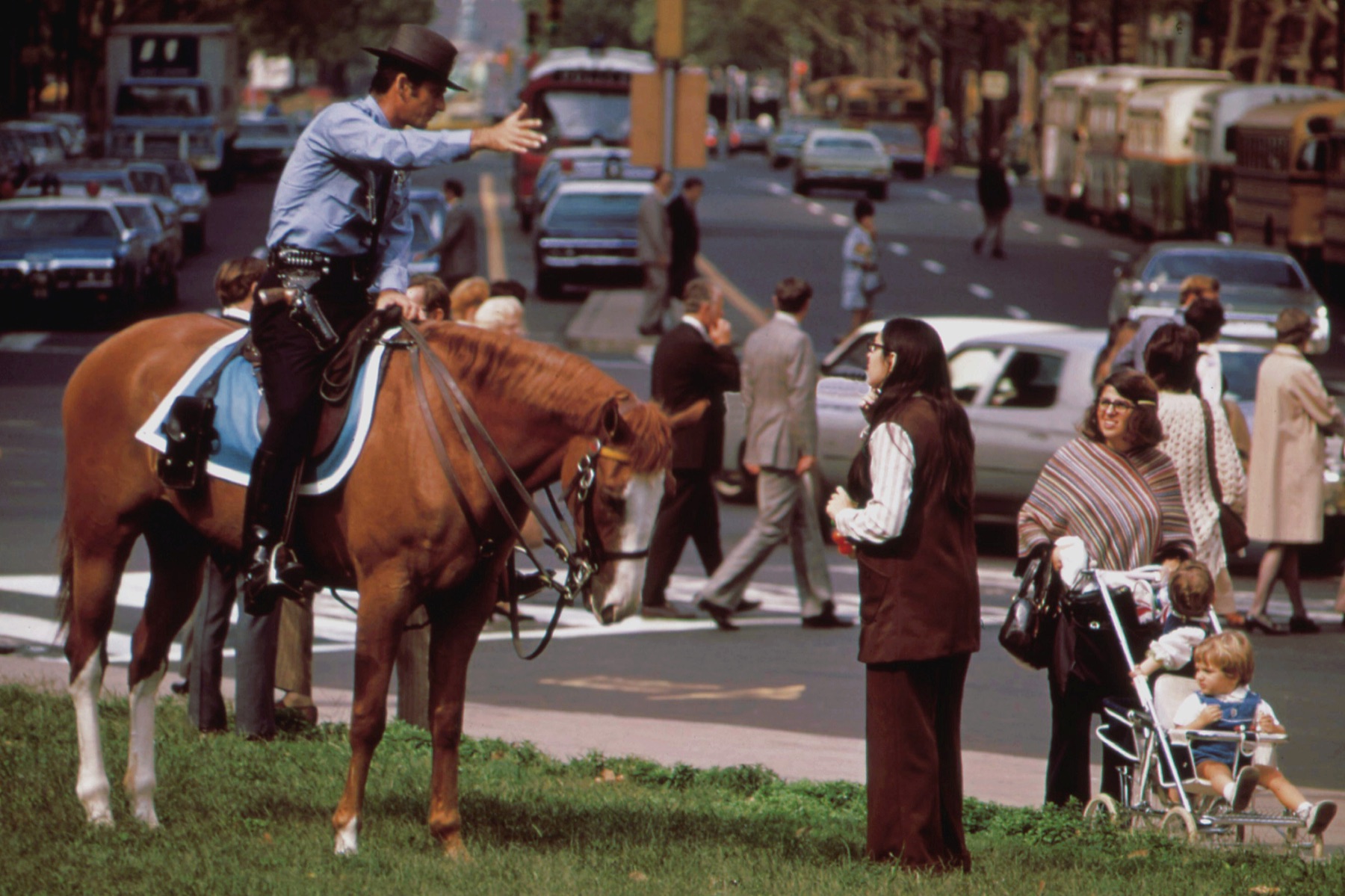
The name lost. Barrett said Center City merchants complained loudly to Police Commissioner Albert N. Brown that the coverage kept customers away. A year after that first story, by Barrett's account, Brown put out a press release calling the day Big Friday. Barrett and Kleger kept writing Black Friday, "year after year." Later in the 1960s even the Inquirer switched from Big Friday to Black Friday.
That's the strange part of the 1961 campaign. By Rosen's report, the stories he put out, a decorated downtown and a family day out, brought shoppers in. The new name went nowhere, because the people he needed to repeat it already had a word for the day.
How did "in the black" become the official story?
For years the term stayed mostly local. It first appeared in The New York Times on November 29, 1975, still describing the busiest shopping and traffic day of the year in Philadelphia. As late as 1985, retailers in Cincinnati and Los Angeles hadn't heard of it. It spread to the rest of the country in the 1980s.
This time the retailers didn't fight the name. They gave it a new meaning. The story that Black Friday is the day stores finally turn a profit, moving from red ink to black, first appears in print in The Philadelphia Inquirer on November 28, 1981.
Ben Zimmer, a language columnist for The Wall Street Journal and a former editor of American dictionaries at Oxford University Press, calls it what it was: instead of replacing Black Friday with Big Friday, retailers and advertisers found a new way to soften the name, and the profit story was "clearly a way to rebrand Black Friday."
It worked better than anything Rosen tried. Nobody had to give up a word they already used. They just got a happier reason for it.
Why is Black Friday on Meta a traffic jam?
More than sixty years after Philadelphia's traffic cops named it, Black Friday is still a jam. The jam just moved into the Meta ad auction.
This month a founder who sells a wellness product posted on r/FacebookAds that their ads had gone from 3x return on ad spend to under 1x. They'd cut spend from $2,500 a day to $700 to $800 a day and were still losing money. They'd been losing money since the end of September, and their cost per 1,000 impressions (CPM) in the US had climbed from about $73 in the summer to $127.
r/FacebookAdsNov 20, 2026Meta ads went from 3x ROAS to under 1x. Cut spend from $2,500/day to $700-800 and have been losing money since end of September. Funnel is tested and working
We usually spend about $2,500 a day on Meta across the account. We have cut that down to $700 to $800 a day because we no longer get the results we used to. We have been running at a loss from the end of September until now, close to two months.
▲ 33💬 93
The most useful reply came from a media buyer. They listed a few account settings worth checking first, but their headline read was that the ads were working and the auction was the problem: late November into December is the most expensive stretch of the year to reach that founder's 50-plus customers.
r/FacebookAdscomment · Nov 20, 2026$127 CPM next to a 6.9% CTR means ads are working and the auction you’re in is the problem.
▲ 12
That media buyer's advice for getting out of the jam was "one broad A+ ad set with 6-10 genuinely different concepts." In a separate thread on r/ecommerce, a store owner described what happens when everyone runs the same offer: people visit once and vanish.
r/ecommercecomment · Nov 20, 2026Everyone shouts the same Black Friday discount, so people visit once and vanish.
▲ 4
What Black Friday ads actually scaled?
The week before Black Friday, a researcher on r/FacebookAds went through last year's Black Friday ads in Meta's Ad Library and kept only the ones brands actually spent behind: the same creative duplicated across many ads, or still running weeks after Cyber Monday.
r/FacebookAdsNov 19, 2026I pulled last year's Black Friday Meta ads that brands actually scaled. 8 concepts worth stealing before next week
Most Black Friday ads are the same "UP TO 70% OFF" graphic on a red background.
The ones that scaled usually had a concept on top of the discount.
▲ 2💬 1
The ones that scaled, by that researcher's account, each carried a story the discount sat inside.
- Hume Health called its discount a "price error": "We accidentally listed up to 50% OFF on the Hume Band, and our system froze. Finance is mad. Customers are glad."
- Her Bodhi used proof instead of "selling fast": "Last year, we sold out 5 times in November, and it's happening again fast."
- Norse Organics ran a reluctant sale: "We almost didn't do a Black Friday sale..."
- Montessori Generation sold the shipping deadline before Christmas instead of the sale deadline.
- ColonBroom took its proven evergreen ad and put the Black Friday offer on top of it.
That's the 1981 move. Retailers kept the name everyone already used and gave it a better reason. These brands kept the discount every shopper expected and gave it a story: a price error, a sell-out record, a reluctant founder. Without one, a discount looks like everyone else's that week.
It also means there's no single right Black Friday ad. The same researcher found five different kinds of story working for five different brands, and the only way to know which one works for yours is to run several.
How to write Black Friday ads that aren't just a discount
- The mistake. Frame the offer as something that shouldn't exist: a price error, an overstock, a batch that came out wrong.
- The record. Use a real number from last year: sell-outs, waitlists, how fast it went.
- The reluctant sale. Say why you almost didn't discount, and why you did.
- The deadline that matters. For gifts, the real deadline is whether it arrives before Christmas.
- Your best ad, with the offer on top. Keep the creative that already works and change the first line.
Then do what Rosen's newspapers did: put out more than one story at once. Run several of these as different concepts, let the results pick the winner, and keep the one that works running past Cyber Monday. Philadelphia's merchants learned that you can't argue a crowd out of the name it already uses, and that you can give it a better reason to show up.
Frequently asked questions
Why is it called Black Friday?
Philadelphia police named it. In the late 1950s and early 1960s, traffic cops called the day after Thanksgiving Black Friday because of the crowds and traffic jams downtown, when they had to work 12-hour shifts. Police in Rochester, New York used the term too. The "in the black" profit explanation came later, in the 1980s.
Is Black Friday named after stores making a profit?
No. The profit story, that stores move from red ink to black ink that day, first appeared in print in The Philadelphia Inquirer on November 28, 1981. Language columnist Ben Zimmer calls it a way retailers and advertisers rebranded a name they didn't like. The term came from Philadelphia police describing traffic.
What was Big Friday?
Big Friday was the name Philadelphia merchants preferred for the day after Thanksgiving. It was in use from at least 1957, and in 1961 city PR man Abe S. Rosen tried to make it official to replace Black Friday. Rosen reported a strong weekend, but newspapers kept writing Black Friday and the new name faded.
When did Black Friday become a national term?
Slowly. The New York Times first used it on November 29, 1975, still to describe Philadelphia's traffic. As late as 1985 retailers in Cincinnati and Los Angeles hadn't heard the term. It spread across the US in the 1980s, around the time the "in the black" explanation took hold.
Why are Meta ads so expensive on Black Friday?
More brands bid for the same shoppers in the same weeks, so the price of reaching them climbs. One founder on r/FacebookAds reported US CPMs of $127 this November, up from about $73 in the summer. A media buyer replying to them said the ads were working, the auction was the problem, and late November into December is the most expensive stretch of the year.
What makes a Black Friday ad work on Meta?
A reason to buy beyond the discount. A review of last year's Black Friday ads that brands kept spending on found stories around the offer: a "price error," a record of selling out, a reluctant sale. Most of the rest were the same red "up to 70% off" graphic. Test several different stories and let results pick the winner.