You've seen the ad: an influencer eating in their car. In March 2026 a post on r/CommercialsIHate titled "I refuse to eat anywhere that advertises with an influencer eating in their car" collected 1,806 upvotes. People can smell a paid post from the first frame now.
r/CommercialsIHateMar 12, 2026I refuse to eat anywhere that advertises with an "influencer" eating in their car
Why is this shit so common? Why the fuck would I listen to some random paid influencer who has to eat in their car? Why is there no originality in advertising?
▲ 1.8k💬 195
They could smell it in 1929 too. On Easter Sunday that year, a group of young women walked down Fifth Avenue in New York smoking cigarettes and told a New York Times reporter they were "not favoring any particular brand." A few paragraphs later, the same reporter wrote: "Two were asked which brand they favored, and they named it."
That stunt, paid for by a tobacco company, is still retold again and again as one of the first influencer campaigns. Stuart Ewen calls it the most overrated public relations campaign in American history. Ewen is a distinguished professor at Hunter College and the City University of New York, and his book PR! A Social History of Spin was the basis for the BBC series The Century of the Self. He knows this story better than almost anyone.
Brands are pouring money into creators right now. In November 2026 The Guardian reported that Unilever is moving budget from TV to influencer marketing. So it's worth knowing what the famous stunt actually did, and what the company behind it was doing the rest of the year.
Who staged the Torches of Freedom stunt?
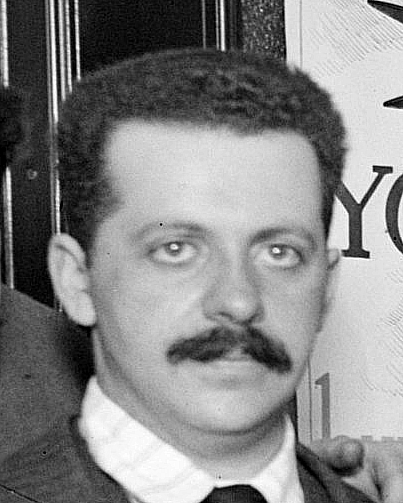
The stunt was the work of Edward Bernays, Sigmund Freud's nephew, who is often called the father of public relations. His client was the American Tobacco Company. In 1928 its president, George Washington Hill, looked at women as a market he couldn't reach and said, "it will be like opening a gold mine right in our front yard."
The obstacle was a taboo. Women were only permitted to smoke in certain places, such as the privacy of their own homes. Bernays took advice from the psychoanalyst A. A. Brill, and the slogan came from Brill: torches of freedom.
Then Bernays cast his marchers the way a brand casts creators today. They should be good looking, he said, but "they should not look too model-y." He hired his own photographers. One of the women was his own secretary. Read that brief again and it could be a UGC casting call from this year: a group of attractive, believable, slightly unpolished people, with the brand controlling the pictures.
On Easter Sunday, 31 March 1929, they walked in the parade on Fifth Avenue and lit up.
How did The New York Times cover it?
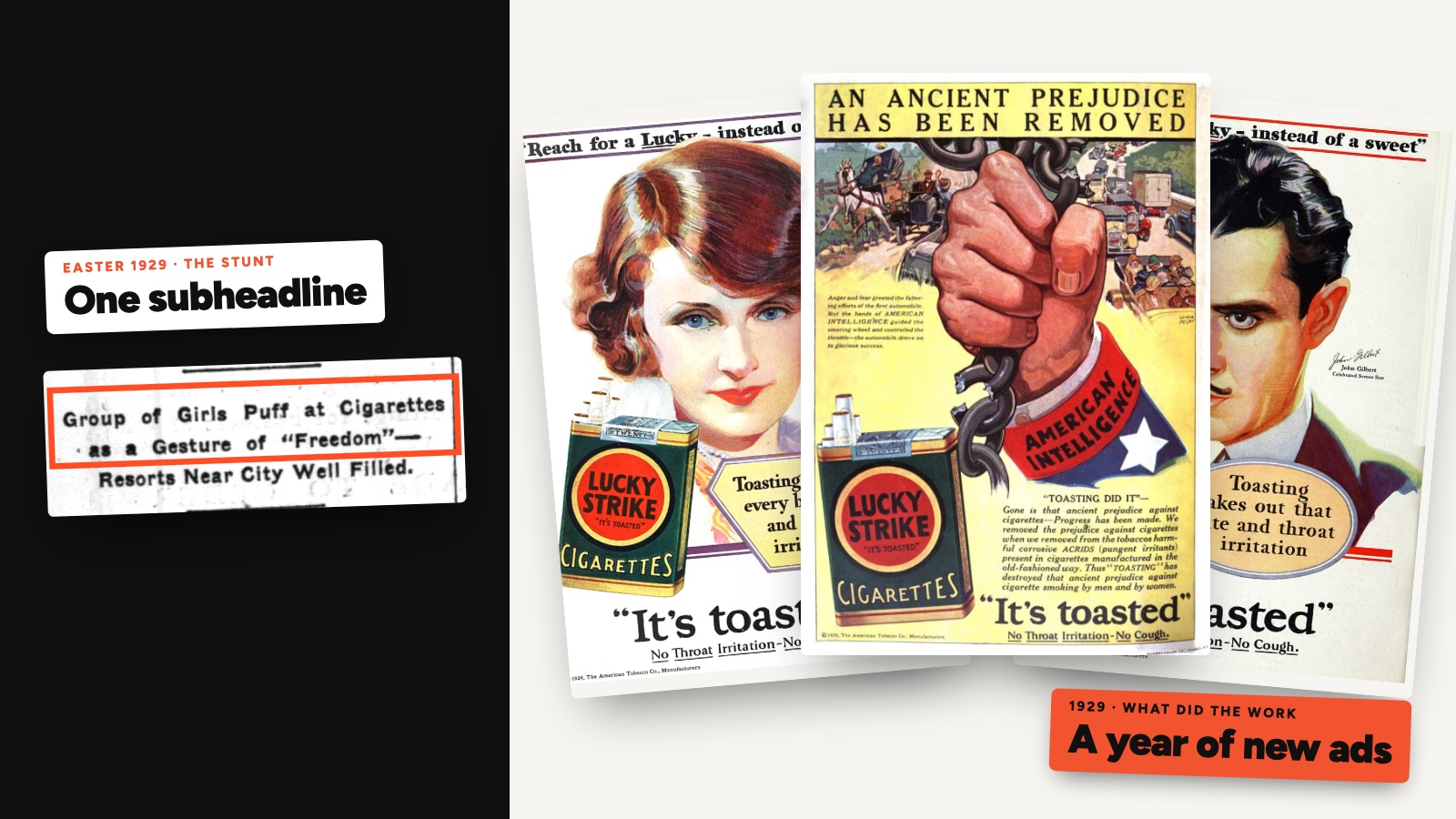
The next morning the stunt did make the front page of The New York Times, which sounds like a win. It wasn't much of one. The cigarettes got a single subheadline in the first column, under a story about Easter crowds, top hats and traffic: "Group of Girls Puff at Cigarettes as a Gesture of Freedom." Then the story went straight back to describing the parade.
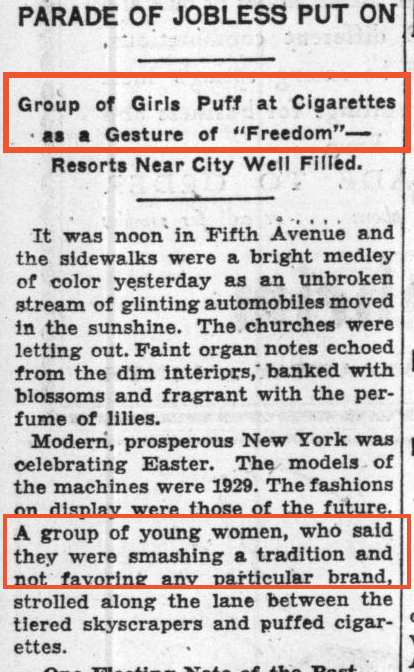
The paper gave the stunt its slogan, too. One of the women explained that the cigarettes were "torches of freedom" lighting the way to the day when women would smoke on the street as casually as men. In that same paragraph, the reporter noted that two of them named their brand as soon as someone asked.
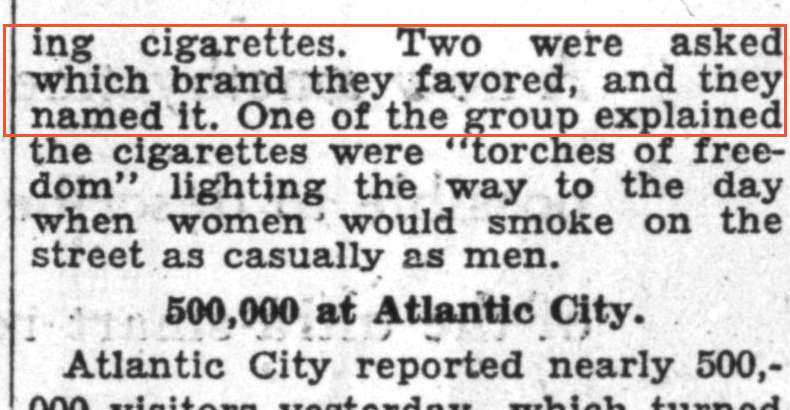
Almost a century before "paid partnership" labels, the sponsorship gave itself away in one sentence. And by Ewen's account, the coverage overall was far more modest than Bernays's own telling suggests.
The bigger point is timing. By 1929 many middle-class women had already begun smoking in public. The parade didn't start that change. It rode one that was already well underway, and what turned a few lines on a busy front page into a legend was the story Bernays told about it afterward.
What was American Tobacco paying for all year?
The parade was one Sunday. The magazine ads kept running.
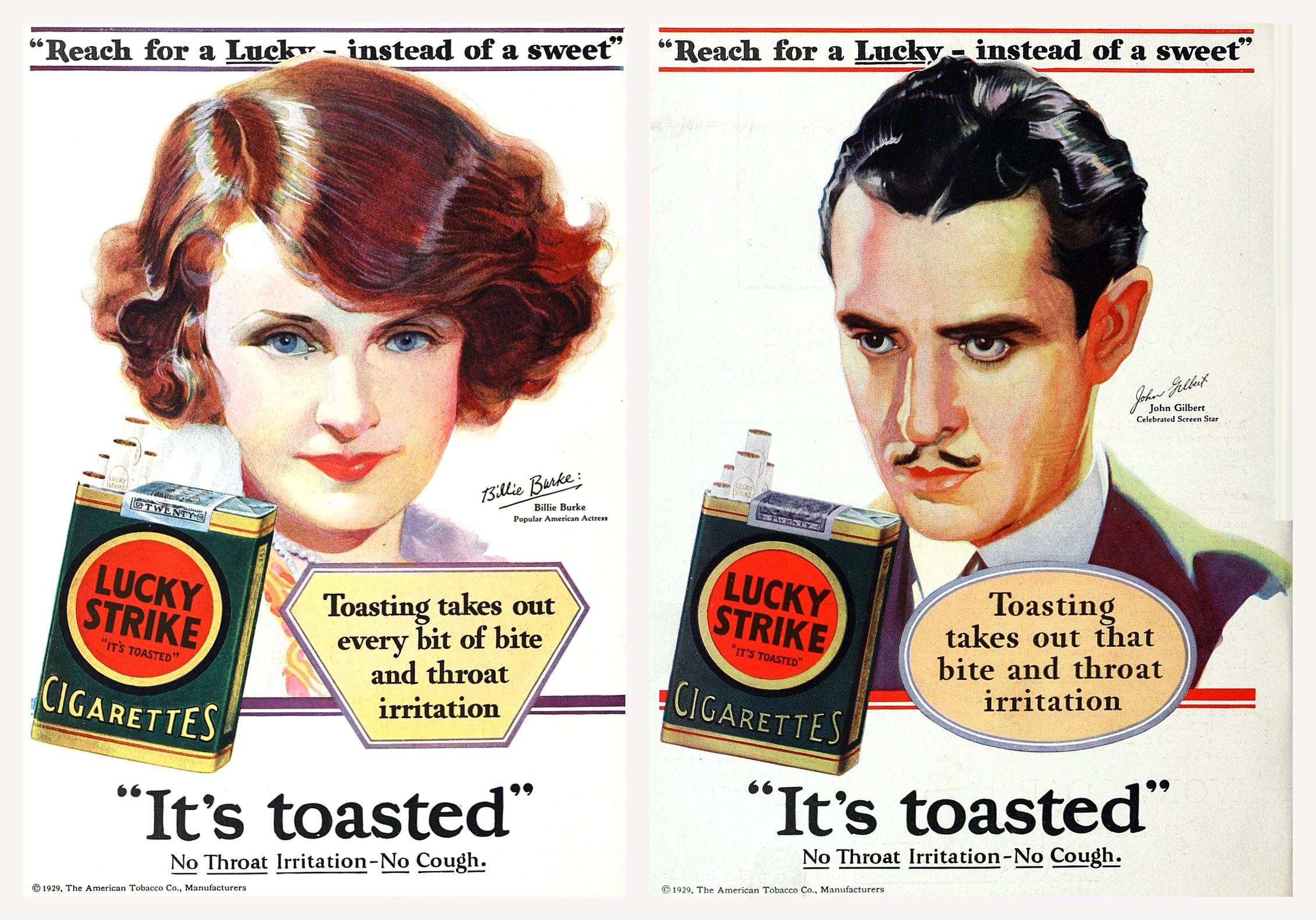
In 1929 American Tobacco put screen stars on Lucky Strike ads in Photoplay, the movie magazine: the actress Billie Burke in July, the screen star John Gilbert in September, both under the same line, Reach for a Lucky instead of a sweet.
By December, readers of Theatre Magazine got a completely different angle. The headline was An Ancient Prejudice Has Been Removed, over a giant fist snapping a chain.
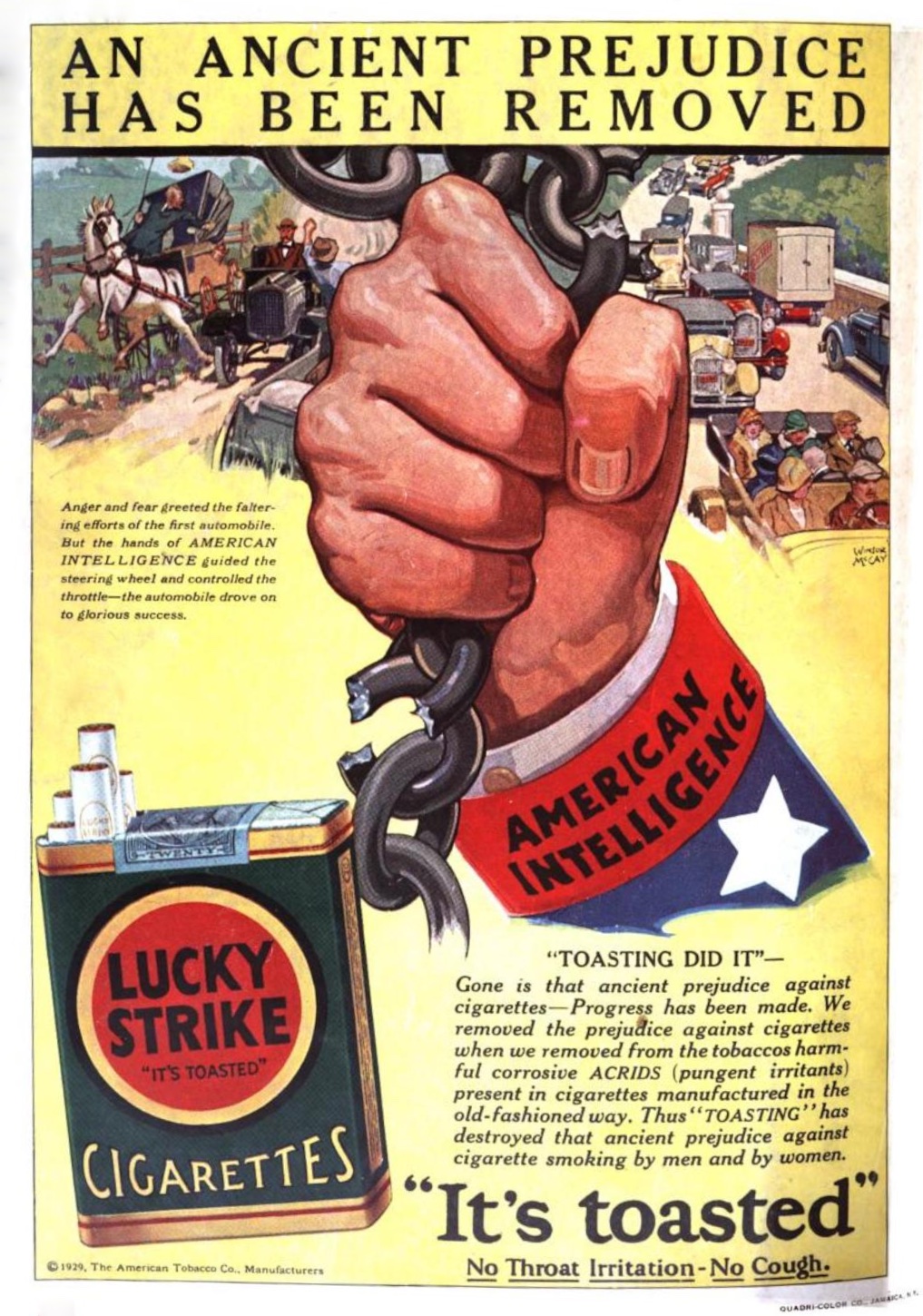
Put the year together and the pattern is obvious. The company spoke to the same market over and over, with a new face, a new magazine or a new argument each time: a woman, a man, a sweet craving, a broken taboo. The parade was one moment in that run. It's the part everyone remembers because Bernays kept telling the story, and a year of paid ads with famous faces makes a duller legend than a march down Fifth Avenue.
Why do founders still chase the one big moment?
Most founders know the modern version of this mistake from their own accounts. One stunt, one viral video or one hot creator takes off, and the whole plan quietly bends around keeping that moment alive.
In November 2026 a founder on r/ecommerce described how that ends. One creator's videos drove roughly 40% of the brand's monthly sales for six weeks. Then she signed an exclusive deal with a bigger brand, and the videos stopped overnight. The fix they landed on looks a lot like American Tobacco's year: they wrote down what had actually sold, briefed it to several new creators, and three became steady sellers.
r/ecommerceNov 24, 2026One creator drove 40% of sales and I panicked
A creator with about 62K followers posted a skincare routine video for us last spring, and over the next six weeks she produced roughly 40% of our monthly sales, so I spent those weeks feeling lucky, until she signed an exclusive deal with a larger brand and her videos for us stopped overnight.
▲ 41💬 38
The platform now pushes in the same direction. A media buyer who says they review thousands of ads every day put it bluntly on r/FacebookAds this month.
r/FacebookAdsNov 10, 2026I analyzed 40,000+ top-performing ads. Here are 17 creative concepts worth stealing in 2026 (with examples)...
Your creative is basically your targeting now.
Which means making 10-20 variations of the same winning ad isn’t working anymore. You need different concepts to reach different audiences.
▲ 83💬 23
That's the 1929 lesson in Meta's terms. Ten edits of one winner are still one moment. Different concepts, different faces and different arguments are what reach different people, and when every brand copies the same format, like the influencer eating in their car, viewers learn to tune it out.
How to run your ads like American Tobacco did in 1929
- Ride a change your customers are already making. Women were already smoking in public before the parade. Find what your customers are already doing or wanting, and make ads about that.
- Put many faces on the same promise. Lucky Strike used an actress in July and a screen star in September. Brief the same offer to several creators and presenters instead of one.
- Change the argument, not just the edit. A sweet craving and a broken taboo are two different reasons to buy. Ten variations of one winner aren't ten concepts.
- Don't let one moment carry the month. If one video, stunt or creator is driving a big share of your sales, start building its replacements now.
- Keep the run going. Write down what sold, turn it into new concepts, and judge each one on CPA and ROAS instead of on how famous it got.
Bernays's parade is remembered because of the story he told about it. What American Tobacco actually did was keep the ads coming.
Frequently asked questions
What was the Torches of Freedom campaign?
A 1929 publicity stunt Edward Bernays ran for the American Tobacco Company. He paid a group of women to smoke while walking in New York's Easter Sunday parade on 31 March 1929 and framed the cigarettes as "torches of freedom," a phrase that came from the psychoanalyst A. A. Brill.
Did the Torches of Freedom campaign work?
Not as well as the legend says. The New York Times gave it one subheadline, and historian Stuart Ewen notes that many middle-class women already smoked in public by 1929. He calls it the most overrated public relations campaign in American history.
Was Torches of Freedom the first influencer campaign?
It's often retold as one, because Bernays cast women who looked ordinary ("not too model-y") and hired his own photographers. The paid celebrity Lucky Strike ads American Tobacco ran through 1929 are a closer match for a modern creator program.
What else did American Tobacco do to sell cigarettes to women in 1929?
It ran Lucky Strike magazine ads all year with changing faces and arguments: actress Billie Burke in July and screen star John Gilbert in September under Reach for a Lucky instead of a sweet, then An Ancient Prejudice Has Been Removed in Theatre Magazine in December.
Why shouldn't a brand build its ads around one big moment?
Because moments end. One founder on r/ecommerce saw a single creator drive about 40% of monthly sales, then lose her overnight to a bigger brand. Media buyers on r/FacebookAds also report that Meta now rewards different concepts over many variations of one winner.